Showing posts with label treatment. Show all posts

Tuesday, June 15, 2010

Mesothelioma Doctor Explains Symptoms, Diagnoses and Treatment

Mesothelioma Doctor explains Symptoms, Diagnoses and Treatment of this deadly cancer. The Mesothelioma Cancer................................


Bookmark and Share


Enough said!!

Friday, December 11, 2009

Dietary Suggestions for Managing Inflammation with Asbestosis and Mesothelioma

Wednesday, December 9, 2009 In "Fight Asbestosis inflammation to Prevent Mesothelioma From Forming" researchers identified chronic inflammation from asbestosis as a risk for developing mesothelioma.

Below are some suggestions from the book "Life Over Cancer" by Keith I. Block, M.D., for managing inflammation through diet. For patients battling asbestosis, making some dietary changes may not only lead to improved health, but can prevent the development of mesothelioma.

This information is also beneficial for anyone currently undergoing mesothelioma treatments.

Minimize Inflammation "Offenders." Avoid cigarette smoke, avoid excessive alcohol consumption, maintain a normal bodyweight, and get plenty of sleep.

Exercise - but be careful. If you are not actively exercising, but are planning on getting started be careful of injuries. This could lead to additional inflammation, and this should be kept to a minimum.

Salicylates. Salicylate is a natural anti-inflammatory compound found in foods. While this is the active ingredient in aspirin, it does not prevent clotting or lead to gastrointestial discomfort. Tomatoes, turmeric, and wintergreen are the best sources for salicylates.

Flavonoids. Flavonoids act much the same as Celebrex and other anti-inflammatory medications. Berries such as cherries, raspberries, blueberries and blackberries are very high in flavonoids. Other foods such as spinach, broccoli, sweet potatoes, and zucchini as also rich in flavonoids.

Spices. Whole-leaf types of the following spices also offer anti-inflammatory benefits. Basil, oregano, bay leaves, rosemary, sage, thyme, and mint.

Always check with your physician for information regarding diet and exercise during your mesothelioma and asbestosis treatment. Also check with your physician if you are considering taking supplements.


MesotheliomaHelp.Net

posted by Nancy Meredith

Thursday, September 3, 2009

Chemotherapy is the use of drugs to fight mesothelioma cancer. It is one of the major therapeutic options available for cancer treatment and many of the great success stories in the recent fight against the disease are due to improvements of the chemotherapy agents. To understand how these drugs work we have to understand what cancer is and how it works.

Cancer including mesothelioma is the name of a family of diseases whose fundamental behavior involves the uncontrolled division of cells and the subsequent invasion of these cells into other parts of the body. It's a cellular growth that will never stop without intervention. Although people often speak of cancer as if it were a single entity, it is in fact a number of highly-individualized diseases that all work along these same two principles. For our discussion of chemotherapy, the nature of cell division and replication is the most important area to understand about cancer because this is the domain that chemotherapy targets for treatment.

As we said above, chemotherapy refers to the use of drugs and other chemical (“chemo” is a derivative of “chemical”) agents to fight cancer. Most traditional chemotherapy drugs fight cancer by inhibiting the process of cell division (mitosis) among rapidly dividing cells, although some drugs may work along a different framework. There are drugs which enhance the apoptotic process by which malformed cells are removed from the body and others that target different phases in the cell cycle.

In all cases, successful chemotherapy cures the body of cancer by arresting the production of new cancer cells and killing off whatever malignant structures remain. As such, chemotherapy drugs are considered cytotoxic agents which means drugs that kill cells.

But one of the biggest problems with chemotherapy is its lack-of-specificity for cancer cells. Chemotherapy is considered a broad-scope treatment because it attacks all rapidly dividing cells—not just cancer cells. This is the primary reason for the side effects that are commonly associated with it, such as anemia, digestive disorders and hair loss. The natural activity of bone marrow cells, as is also the case with the cells that control the growth of hair follicles and those that line the digestive track, is also characterized by rapid division, so they, too, are affected by chemotherapy. Science is only now beginning to map the different internal structures between normal cells and cancerous ones, so traditional cancer treatments, such as chemotherapy, have been unable to distinguish between these cell types in meaningful ways. Even as recent years have shown a great increase in the overall efficacy of many chemotherapy agents—as well as a reduction in the severity of many of the side effects associated with treatment—chemotherapy is still considered a systemic therapy because of the wide scope of cells that are subject to its cytotoxic effects.

Within the standard framework of cancer treatments, chemotherapy is considered the most effective single modality for the treatment of mesothelioma and is likely to be the most commonly deployed treatment as well. Most people who are diagnosed with the disease in its later stages are not eligible for “curative” surgeries, so chemotherapy becomes their best chance at extending life. For patients who are diagnosed in an earlier stage or are otherwise candidates for surgery, chemotherapy is likely to be used along with surgery and radiation therapy.

Even though chemotherapy can be effective at extending life, it is not a curative treatment for the disease because mesothelioma has not cure at this time. Even as advancements in our treatments have led to longer survival times and better control of patient symptoms, the disease continues to resist long-term management and survival.
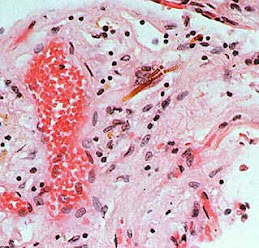
Lung Tissue With Asbestos Fibers

Lung Tissue With Asbestos Fibers